Designing a keyboard-first platform for enterprise portfolio exploration
A concept-driven internal platform designed to help enterprise sales teams showcase hundreds of digital projects during client meetings. The experience focused on speed, discoverability, and fully keyboard-driven navigation, allowing users to present work without interrupting conversations.
Services
Product Design • UX Research • Interaction Design • Prototyping • Design Concepts
Overview
Large enterprise organizations often maintain hundreds of case studies across industries, technologies, and service lines. Finding the right project during a client meeting can take valuable time and break the flow of the conversation.
The goal was to rethink how project portfolios are explored, replacing traditional navigation patterns with an experience optimized for speed, focus, and keyboard interaction.
Challenge
The existing experience relied on conventional navigation, filters, and menus that became inefficient as the portfolio continued to grow.
The platform needed to support complex filtering, multiple selection criteria, and instant navigation while remaining intuitive for first-time users and efficient for experienced presenters.
Goals
Create an interface that minimizes interaction cost during presentations, enables rapid discovery of relevant projects, and allows users to navigate almost entirely without touching a mouse.
Research & Discovery
The exploration focused on how designers, sales managers, and solution architects search for projects in real client conversations.
Several interaction models were evaluated, including traditional filtering, contextual navigation, keyboard shortcuts, and command-based workflows. The research showed that keyboard navigation dramatically reduced navigation time once users became familiar with the interface.
Design Direction
Instead of optimizing individual screens, the product was designed around interaction patterns.
Every decision prioritized navigation speed, reducing cognitive load, and minimizing unnecessary clicks.
The interface intentionally removed visual distractions so users could remain focused on presenting relevant work rather than operating the software.
Concept Exploration
One of the most valuable phases of the project involved creating multiple interaction concepts before committing to a final direction.
Different navigation architectures, selection flows, filtering logic, and presentation modes were explored to compare usability, learning curve, and efficiency.
-
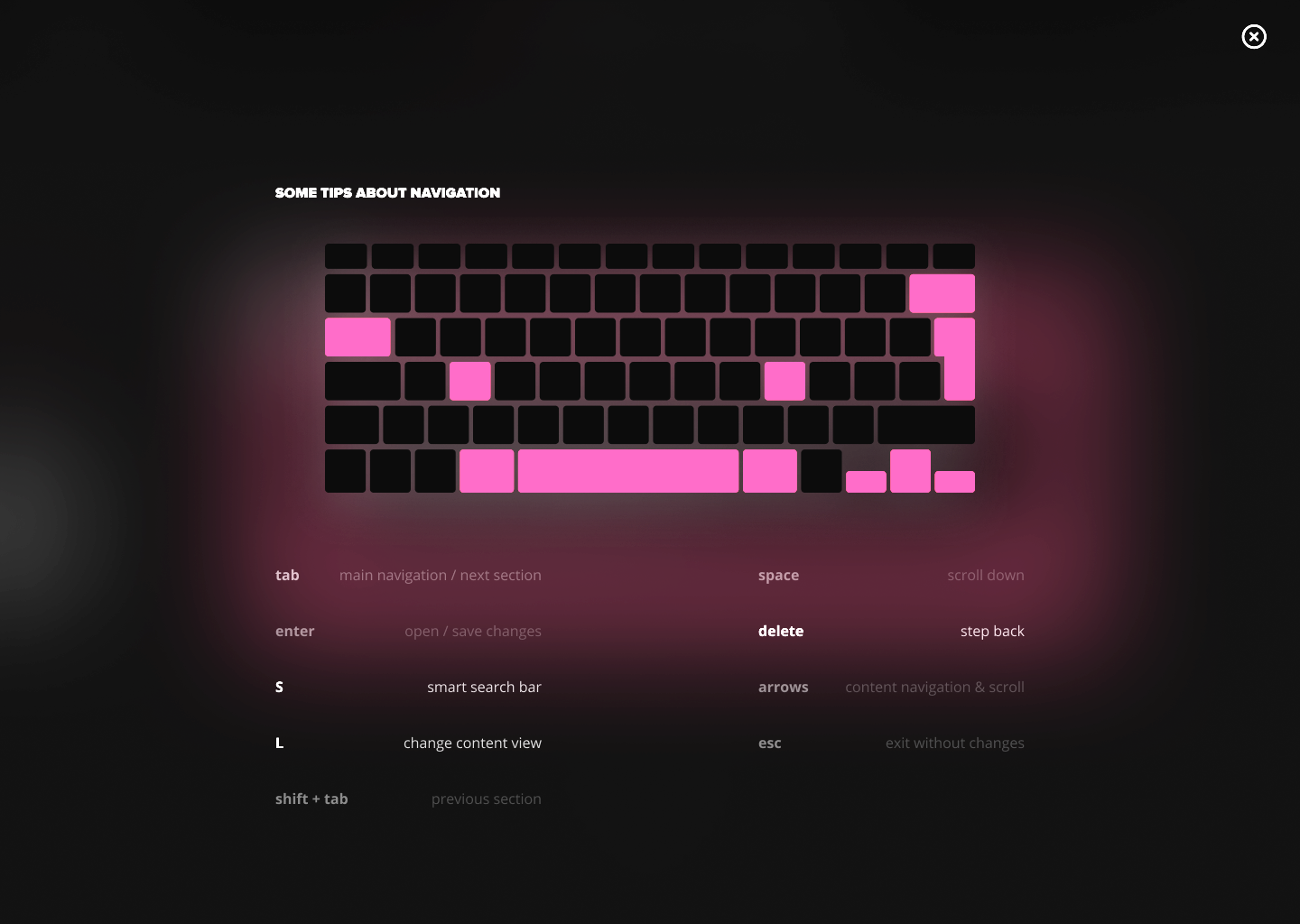
The defining feature of the platform became complete keyboard navigation.
Users could:
switch between sections
search instantly
apply filters
navigate content
confirm actions
cancel changes
browse projects
change layouts
without relying on a mouse.
The result felt closer to professional creative software than a traditional enterprise dashboard.
-
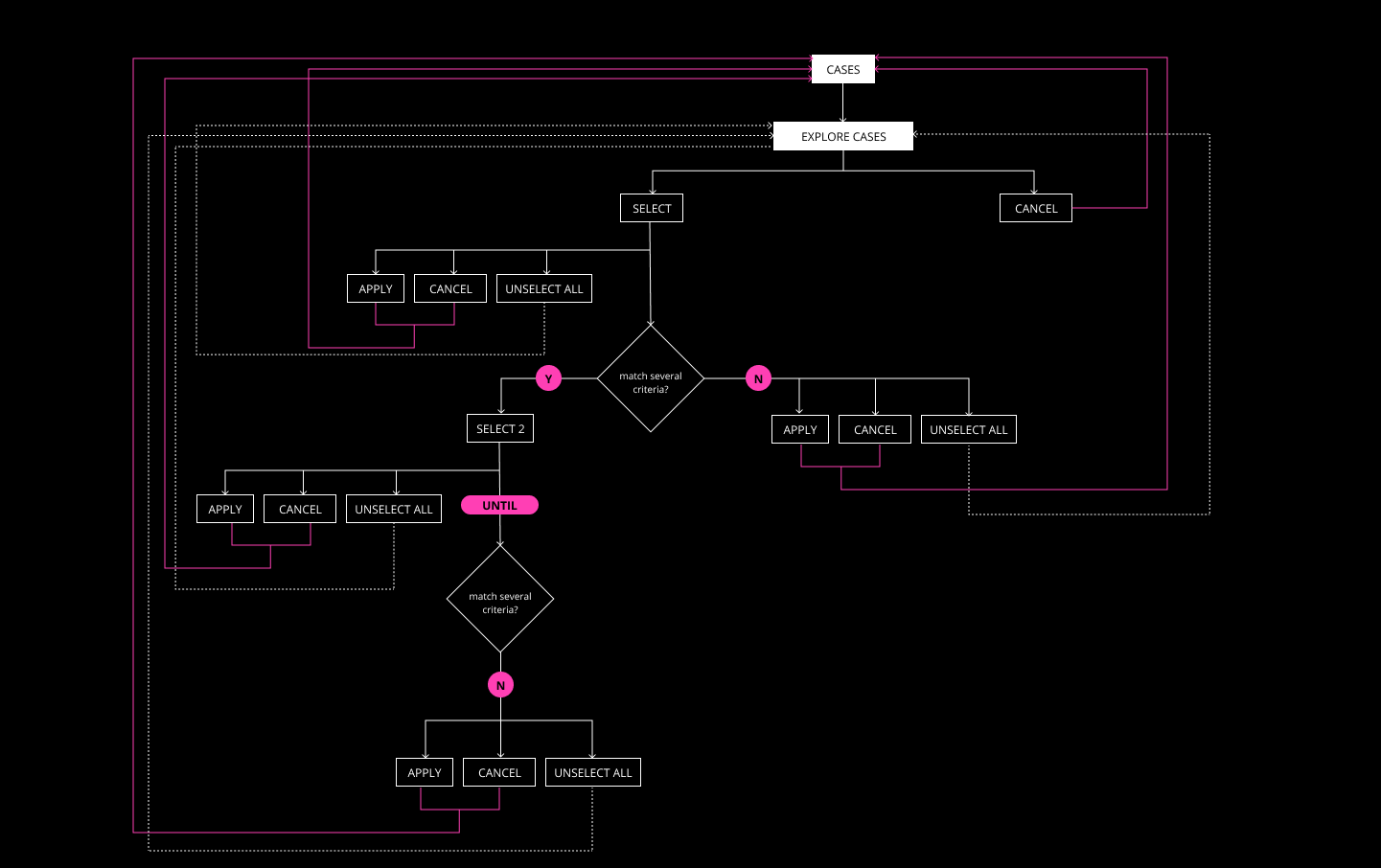
Special attention was given to designing interaction states rather than visual styling.
Selection logic, nested filters, multi-selection behavior, confirmation patterns, and keyboard shortcuts were carefully mapped to eliminate unnecessary friction while keeping the experience predictable.
Flow diagrams were created to validate every possible interaction before moving into interface design.
-
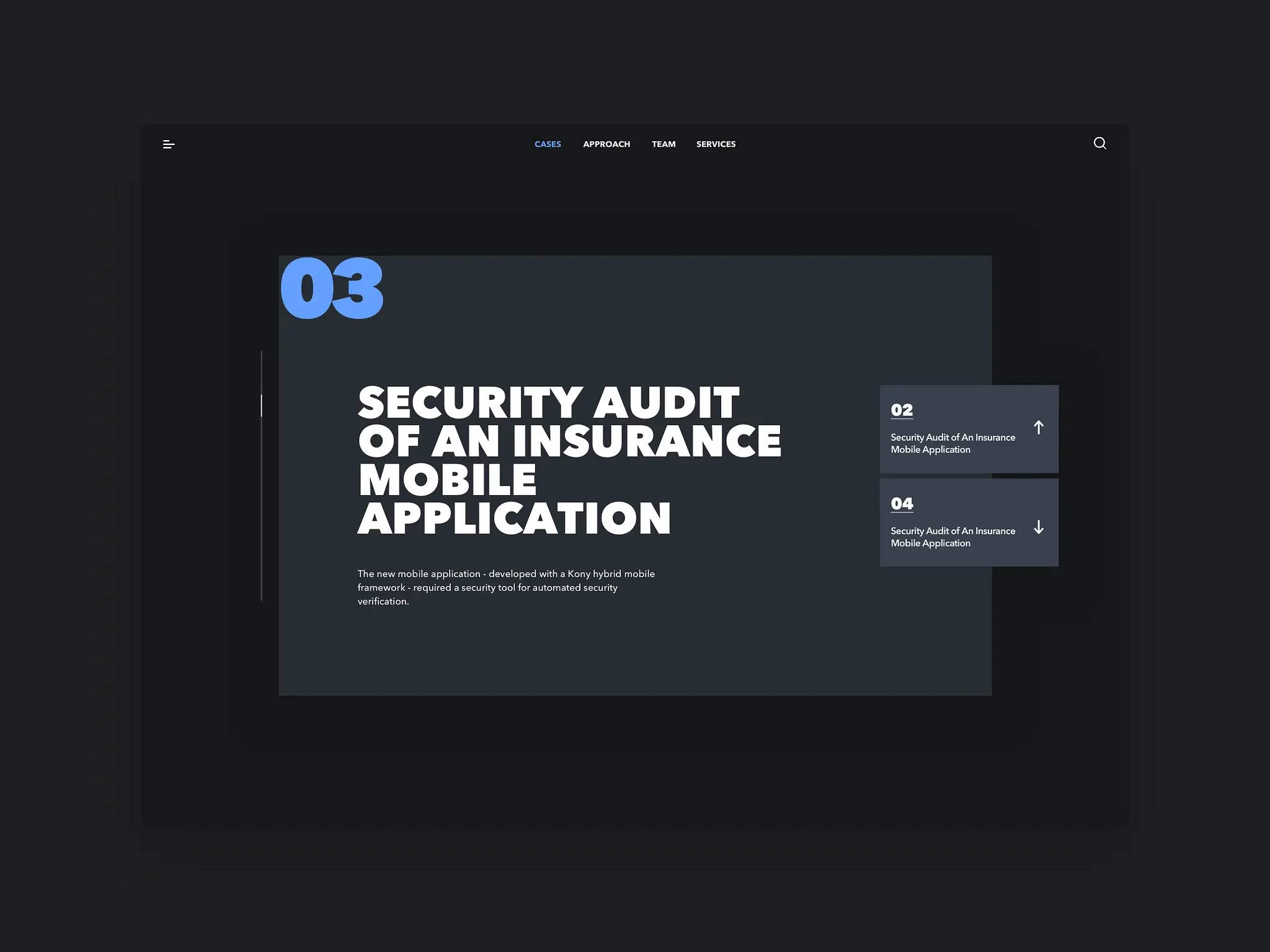
To support rapid concept iteration, reusable interface components and interaction patterns were designed from the beginning.
The modular approach made it easy to test different navigation concepts while maintaining consistency across the entire product.
Outcome
The project resulted in several validated design concepts for a keyboard-first enterprise portfolio platform.
The work demonstrated how interaction design can significantly improve the efficiency of enterprise software by reducing navigation time, simplifying complex workflows, and enabling faster access to relevant information during client presentations.
Results
-
Optimized for power users with minimal mouse dependency.
-
Several UX directions were explored and validated before finalizing the interaction model.
-
Designed to accommodate hundreds of projects without sacrificing discoverability.
-
Built specifically for live client meetings where speed and uninterrupted storytelling matter.
